
The rise of fully digital banks has disrupted the traditional financial landscape, offering a new paradigm for managing finances. These institutions, operating solely online without physical branches, present both compelling advantages and potential drawbacks for consumers. Understanding the pros and cons of fully digital banks is crucial for making informed decisions about your banking needs in today’s rapidly evolving digital world. This article will delve into the key benefits and disadvantages of choosing a fully digital bank, examining factors such as accessibility, fees, security, and customer service. Whether you’re considering switching to a digital bank or simply curious about the future of finance, this analysis will provide valuable insights.
Fully digital banks often boast lower operating costs, which can translate into higher interest rates on savings accounts and lower fees compared to traditional brick-and-mortar banks. This makes them an attractive option for those seeking to maximize their returns and minimize expenses. However, the lack of physical branches can be a significant disadvantage for customers who prefer in-person interactions for complex transactions or personalized advice. This article will explore the pros and cons of fully digital banks in detail, weighing the convenience and cost-effectiveness against the potential limitations and risks associated with a purely online banking experience. By carefully considering these factors, you can determine if a fully digital bank aligns with your individual financial goals and preferences.
Advantages of Digital-Only Banking
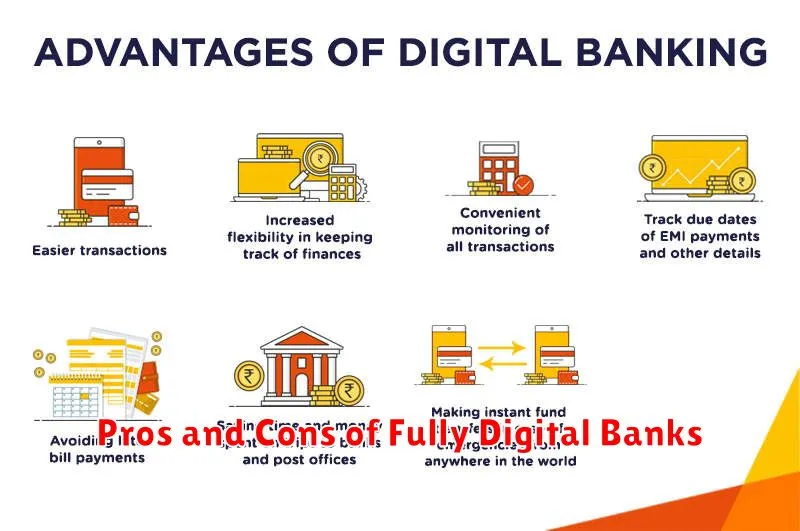
Digital-only banks often offer lower fees than traditional banks. This is because they have lower overhead costs without physical branches to maintain. They can pass these savings onto customers through reduced or eliminated monthly maintenance fees, overdraft charges, and ATM fees.
Higher interest rates on savings accounts are also common with digital banks. Because they are competing with established institutions, they frequently offer more competitive rates to attract customers.
Convenience is a key advantage. Manage your finances anytime, anywhere, from your mobile device. This 24/7 access eliminates the need to visit a physical branch during limited business hours.
Challenges Faced by Digital Banks
Digital banks face unique challenges in the financial landscape. Cybersecurity is paramount, with constant threats requiring robust systems and vigilance against fraud. Maintaining customer trust is crucial, especially without physical branches. Building this trust requires transparent communication and reliable digital services.
Regulatory compliance is another significant hurdle. Digital banks must navigate evolving regulations and ensure they meet all requirements. Competition is also fierce, with both traditional banks and other digital players vying for market share. This competitive pressure necessitates constant innovation and adaptation to attract and retain customers.
Finally, profitability can be a challenge. Lower operating costs are often offset by the need for heavy investment in technology and marketing to acquire customers.
Comparing Digital Banks and Traditional Banks
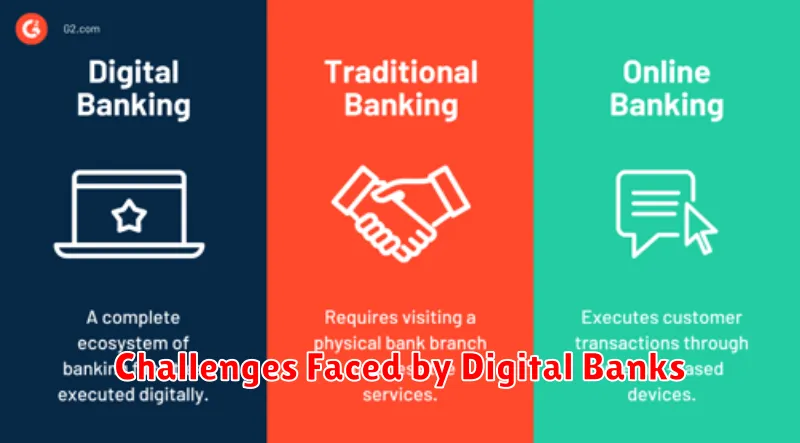
Digital banks and traditional banks offer similar core services like checking accounts, savings accounts, and money transfers. However, they differ significantly in their operational models and customer experience.
Traditional banks operate through physical branches, while digital banks primarily operate online and via mobile apps. This key difference leads to variations in accessibility, cost structures, and service offerings.
| Feature | Digital Banks | Traditional Banks |
|---|---|---|
| Accessibility | 24/7 online access | Limited by branch hours |
| Fees | Typically lower | Potentially higher |
| Customer Service | Primarily online and phone support | In-person, online, and phone support |
Security Concerns in Digital Banking
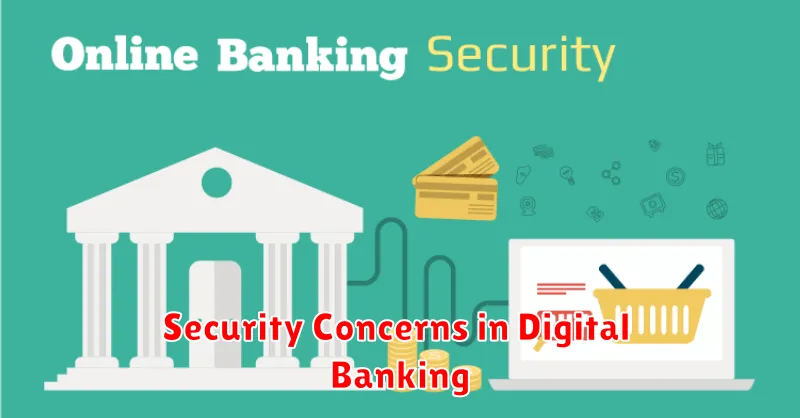
While digital banks offer numerous advantages, security remains a critical concern. The reliance on technology and internet connectivity introduces potential vulnerabilities.
Data breaches pose a significant threat. Cybercriminals constantly seek to exploit system weaknesses to gain unauthorized access to sensitive customer information. Phishing attacks and malware are common tactics used to compromise accounts. Additionally, the lack of physical branches can make it more challenging to resolve security issues or verify identities in person.
Furthermore, the decentralized nature of some digital banking platforms can complicate regulatory oversight and increase the difficulty of tracking fraudulent activities across borders.
The Future Landscape of Digital Banking
The future of digital banking promises a seamless and personalized experience. Artificial intelligence (AI) and machine learning will play a crucial role, powering hyper-personalized financial advice and fraud detection.
Biometric security measures will enhance account safety and streamline transactions. The rise of open banking will facilitate greater interoperability between financial institutions, allowing customers to manage their finances across different platforms effortlessly.
Furthermore, blockchain technology has the potential to revolutionize payments and other banking services, making them faster, cheaper, and more secure. Expect increased integration with other digital services, blurring the lines between traditional banking and other aspects of daily life.
