
In today’s fast-paced digital world, managing your finances efficiently and conveniently is paramount. Mobile banking and internet banking have emerged as powerful tools, offering a plethora of services at your fingertips. But with both options readily available, it can be challenging to determine which best suits your individual needs. This article delves into the nuances of mobile banking vs. internet banking, comparing their features, benefits, and drawbacks to help you make an informed decision. Understanding the core differences between internet banking and mobile banking is the first step towards optimizing your financial management.
This comprehensive comparison will explore the advantages and disadvantages of both mobile banking and internet banking, considering factors such as accessibility, security, functionality, and transaction capabilities. Whether you prioritize the on-the-go convenience of mobile banking or the robust features of internet banking, understanding the strengths and weaknesses of each platform is crucial. By the end of this article, you will be equipped with the knowledge to choose the best online banking solution tailored to your lifestyle and financial requirements, allowing you to navigate the world of digital finance with confidence. Let’s explore the world of mobile banking vs. internet banking.
Key Differences Explained
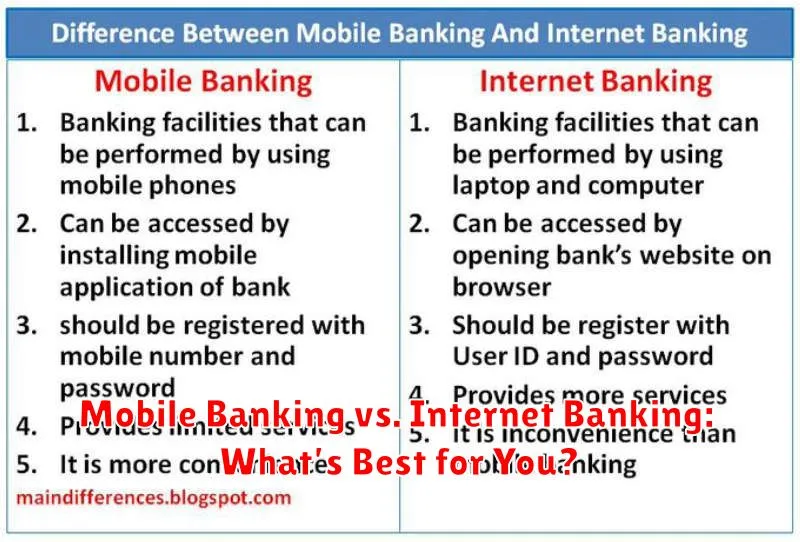
While both offer digital banking convenience, key differences distinguish mobile and internet banking. Accessibility is paramount. Mobile banking, via app, requires a smartphone and internet or data connection. Internet banking relies on a web browser accessible from any internet-enabled device.
Functionality also varies. Mobile banking often prioritizes common transactions like balance checks, transfers, and bill payments. Internet banking typically offers a broader range of services, including in-depth account management, transaction history review, and more complex operations.
Security Considerations
Security is a critical concern for both mobile and internet banking. Both platforms employ security measures like multi-factor authentication and encryption to protect user data. However, mobile banking introduces additional risks due to the potential for device loss or malware.
Mobile banking requires vigilance in protecting your device. Ensure you have a strong passcode or biometric lock and install reputable security software. Be cautious of connecting to unsecured Wi-Fi networks while accessing your accounts.
Internet banking security relies heavily on strong passwords and vigilance against phishing scams. Avoid clicking on suspicious links or emails and always access your bank’s website directly.
Convenience and Accessibility
A key differentiator between mobile and internet banking lies in their accessibility and convenience. Internet banking requires a computer and a stable internet connection, limiting its use to specific locations. Mobile banking, on the other hand, leverages the widespread availability of smartphones and cellular networks, offering banking services virtually anywhere, anytime.
This “on-the-go” nature of mobile banking allows for immediate access to account information, funds transfers, and bill payments, even while traveling or commuting. While internet banking provides a more comprehensive platform for managing finances, mobile banking excels in providing quick and essential banking functions at one’s fingertips.
Transaction Limits and Capabilities
Both mobile and internet banking platforms typically impose transaction limits for security and fraud prevention. These limits can vary depending on the bank and the specific type of transaction.
Mobile banking may have lower transaction limits for certain activities, such as daily transfer amounts or mobile check deposits. Internet banking, often accessed on a larger device, might offer higher limits or access to a wider range of transactions, such as wire transfers or international payments. It’s crucial to check with your specific bank for detailed information on their respective transaction limits.
Furthermore, capabilities can differ. While basic transactions like balance checks and transfers are available on both platforms, mobile banking might offer additional features like mobile check deposit or person-to-person payments through apps. Internet banking platforms sometimes provide more complex functionalities, such as advanced investment management tools.
Making the Right Choice
Selecting between mobile and internet banking depends on your individual needs and preferences. Consider your lifestyle and banking habits. Do you need access on-the-go, or do you prefer a larger screen for managing finances? Think about the features most important to you.
Mobile banking excels in convenience and quick transactions, while internet banking offers a broader range of functionalities and a more comprehensive view of your accounts. Security is paramount for both platforms, so ensuring you are using a reputable institution is crucial.
