
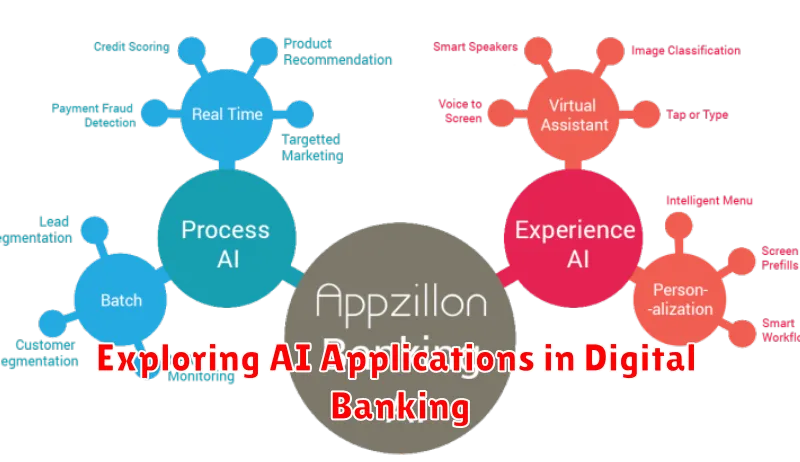
The financial landscape is undergoing a rapid transformation, fueled by advancements in artificial intelligence (AI). Digital banking, in particular, is experiencing a significant shift as AI-powered applications revolutionize customer experience, streamline operations, and enhance security measures. From personalized financial advice and fraud detection to automated customer service and risk assessment, the integration of AI is reshaping the very fabric of how we interact with financial institutions. This exploration delves into the various applications of AI in digital banking, examining their impact on both customers and the industry as a whole. Understanding the current and potential uses of AI in banking is crucial for navigating the evolving financial landscape and harnessing the power of this transformative technology.
This article provides a comprehensive overview of the key AI applications within the digital banking sphere. We will examine how AI-powered chatbots are enhancing customer service, how machine learning algorithms are detecting fraudulent activities, and how predictive analytics are informing investment strategies. We will also explore the ethical considerations and potential challenges associated with implementing AI in financial institutions, including data privacy and algorithmic bias. By examining the multifaceted role of AI in digital banking, we aim to provide a clear understanding of its current impact and future potential in shaping the future of finance.
AI-driven Customer Support
Artificial intelligence is transforming customer support in digital banking. AI-powered chatbots provide 24/7 instant support, answering frequently asked questions and resolving simple issues like password resets or balance inquiries. This frees up human agents to handle more complex requests.
Beyond chatbots, AI enhances customer support through personalized experiences. AI algorithms analyze customer data to anticipate needs and offer proactive assistance. This can include personalized financial advice, fraud alerts, or tailored product recommendations.
Fraud Detection and Prevention

Artificial intelligence (AI) plays a crucial role in enhancing fraud detection and prevention within digital banking. Machine learning algorithms can analyze vast datasets of transaction data to identify patterns indicative of fraudulent activity. This allows for real-time fraud detection, enabling banks to swiftly block suspicious transactions and protect their customers.
AI systems can adapt to evolving fraud tactics, making them more effective than traditional rule-based systems. They can detect subtle anomalies that might go unnoticed by human analysts, significantly reducing the risk of fraud. This contributes to a more secure banking environment for both customers and financial institutions.
Automated Investment Advice
Robo-advisors are transforming investment management by providing automated, algorithm-driven financial planning services. These platforms offer personalized portfolio recommendations based on individual risk tolerance, financial goals, and time horizon.
Typically, users complete a questionnaire to assess their investment profile. The robo-advisor then uses algorithms to create a diversified portfolio, often comprised of low-cost exchange-traded funds (ETFs). These platforms offer significant advantages, including lower fees compared to traditional financial advisors and 24/7 portfolio monitoring.
Furthermore, some robo-advisors provide tax-loss harvesting and automatic rebalancing to optimize portfolio performance and minimize tax liabilities.
Personalized Financial Recommendations

Artificial intelligence (AI) is transforming how digital banking platforms offer personalized financial recommendations. By analyzing individual customer data, including spending habits, income, and financial goals, AI algorithms can provide tailored advice.
These personalized recommendations can range from budgeting tips and savings strategies to investment options and loan products. For instance, AI can identify recurring expenses and suggest areas for potential savings. It can also recommend investment portfolios aligned with a customer’s risk tolerance and financial objectives.
This level of personalization leads to more effective financial management and improved customer satisfaction. AI-driven recommendations empower customers to make informed decisions and achieve their financial aspirations.
AI Challenges and Opportunities
Integrating AI into digital banking presents both exciting opportunities and significant challenges. Data security and privacy are paramount. AI algorithms require vast amounts of data, raising concerns about customer information protection and regulatory compliance.
Bias in algorithms is another hurdle. AI models trained on biased data can perpetuate and even amplify existing societal inequalities. Ensuring fairness and transparency in AI decision-making is crucial.
Despite these challenges, the opportunities are substantial. AI can enhance fraud detection, personalize customer experiences, automate tasks, and improve risk management. It can also enable new services and products, driving innovation and growth within the digital banking sector.
